Root Canal Treatment Cost in India and What to Expect
Categories:
The moment your dentist tells you that you need a root canal, it’s rarely the procedure itself that occupies your mind first. More often, it’s the uncertainty that follows. Will it be painful? Can the tooth still be saved? How many appointments will it take? And perhaps the biggest question of all, how much is it going to cost?
If you’ve started looking for answers online, you’ve probably noticed that the numbers are all over the place. One clinic quotes a few thousand rupees, another quotes significantly more, and before long, it becomes difficult to understand what you’re actually paying for. Is the higher price because of better technology? Does the type of tooth make a difference? Is a crown included? Or are some treatments simply more complex than others?
The reality is that there isn’t a one-size-fits-all answer. The root canal treatment cost in India depends on several factors, many of which are specific to your tooth and your oral health. A straightforward procedure on a front tooth is very different from treating a severely infected molar with multiple root canals. The experience of the dentist, the diagnostic technology used, and the final restoration all play a role in determining the overall root canal treatment cost.
Understanding these factors is important because a root canal isn’t just another dental procedure. It’s a treatment designed to save your natural tooth, relieve pain, and prevent the need for more extensive dental work in the future. Looking beyond the price tag and understanding what contributes to the cost can help you make a confident, informed decision about your oral health.
In this guide, we’ll explain what influences the root canal cost, the average root canal treatment price in India, what happens during the procedure, and what you can expect before, during, and after treatment.
If you’ve ever searched for rct full form, it simply stands for Root Canal Treatment. It refers to a procedure that treats an infection inside the tooth while preserving the natural tooth itself. Rather than extracting the damaged tooth, the dentist removes the infected or inflamed pulp, thoroughly cleans and disinfects the root canals, fills them with a biocompatible material, and seals the tooth to prevent future infection.
The goal of root canal treatment is not just to eliminate pain but to save a tooth that might otherwise need to be removed. Preserving your natural tooth helps maintain proper chewing function, keeps neighbouring teeth from shifting, and avoids the need for more extensive restorative procedures in the future. Thanks to modern local anaesthesia, digital imaging, and advanced rotary instruments, today’s root canal treatment is far more comfortable and efficient than many people expect. In fact, most patients find the experience similar to receiving a routine dental filling.
A dentist may recommend root canal treatment when the pulp inside the tooth becomes infected or inflamed due to deep decay, repeated dental procedures, cracks, fractures, or trauma. While some infections develop gradually, others can worsen quickly if left untreated. Seeking treatment early not only improves the chances of saving the tooth but can also help prevent the infection from spreading to the surrounding tissues, which may increase the complexity of treatment and the overall root canal treatment cost.
Some of the most common signs that indicate you may need a root canal include:
If you experience any of these symptoms, it’s important not to ignore them. Early diagnosis allows your dentist to assess the condition of the tooth and recommend the most appropriate treatment before the infection progresses further.
One of the biggest misconceptions about root canal treatment is that there’s a standard price that applies to every patient. In reality, that’s rarely the case. Just as no two teeth or infections are exactly alike, the cost of treatment can also vary depending on your individual dental condition.
The root canal treatment cost in India is influenced by several factors, including the tooth being treated, the number of root canals involved, the severity of the infection, the technology used during the procedure, and whether the tooth requires a dental crown afterward. Because every treatment plan is tailored to the patient’s needs, your dentist will usually recommend a thorough examination and digital X-rays before providing an accurate estimate.
That said, having a general idea of the root canal treatment price can help you understand what to expect and plan your treatment accordingly.
| Treatment | Estimated Cost |
| Front Tooth RCT | ₹7,000 – ₹20,000+ |
| Premolar RCT | ₹8,000 – ₹20,000 |
| Molar RCT | ₹8,000 – ₹20,000+ |
| Microscopic or Complex RCT | ₹10,000 – ₹25,000+ |
| Dental Crown (additional) | ₹8,000 – ₹40,000+ depending on material |
Note: These are indicative estimates and not fixed treatment charges. The final rct treatment cost, or rct of teeth price depends on factors such as the condition of the tooth, treatment complexity, the technology used, and whether a dental crown or additional procedures are required. Your dentist can provide an accurate estimate after a clinical evaluation.
Now that you have a general idea of the root canal treatment cost in India, it’s important to understand why the price can differ from one patient to another. A root canal isn’t a standard procedure with a fixed fee. Every case is unique, and the treatment plan is based on the condition of the tooth, the complexity of the infection, and the techniques required to achieve a successful outcome. These factors not only influence the overall root canal cost but also play an important role in the long-term health of the treated tooth.
One of the biggest factors affecting the root canal treatment price is the type of tooth that requires treatment. Front teeth usually have a single root canal, making them simpler and quicker to treat. Premolars may have one or two canals, while molars often have three or four canals that require more time, precision, and expertise to clean and seal properly. As a result, root canals performed on molars generally cost more than those on front teeth.
The extent of the infection also has a significant impact on the treatment process. If the infection is detected early, the procedure is often more straightforward and can sometimes be completed in a single visit. However, when the infection has spread deeper into the roots or surrounding bone, additional cleaning, medication, or multiple appointments may be necessary. More complex cases naturally require more time and clinical expertise, which can increase the overall treatment cost.
Modern dental technology has made root canal treatment more accurate, predictable, and comfortable for patients. Many advanced clinics use digital X-rays, electronic apex locators, rotary endodontic systems, and dental microscopes to improve precision during treatment and reduce the risk of missed canals or reinfection. While these technologies may influence the rct treatment cost, they also contribute to better treatment outcomes and long-term success.
The expertise of the dentist performing the procedure is another important consideration. An experienced endodontist or dentist who regularly performs root canal treatments is often better equipped to manage complex cases and unexpected challenges. Although treatment by a specialist may come at a higher cost, it can also provide greater confidence in the quality, precision, and longevity of the treatment.
In many cases, particularly for back teeth, a dental crown is recommended after the root canal is completed. Since the infected pulp has been removed, the tooth can become weaker over time and may be more prone to fractures under normal chewing pressure. A crown helps restore the tooth’s strength, function, and appearance, but it is usually priced separately from the rct of teeth price, which is why the final treatment estimate may be higher than the root canal procedure alone.
Also Read – What Is Full Mouth Rehabilitation and What Does It Involve
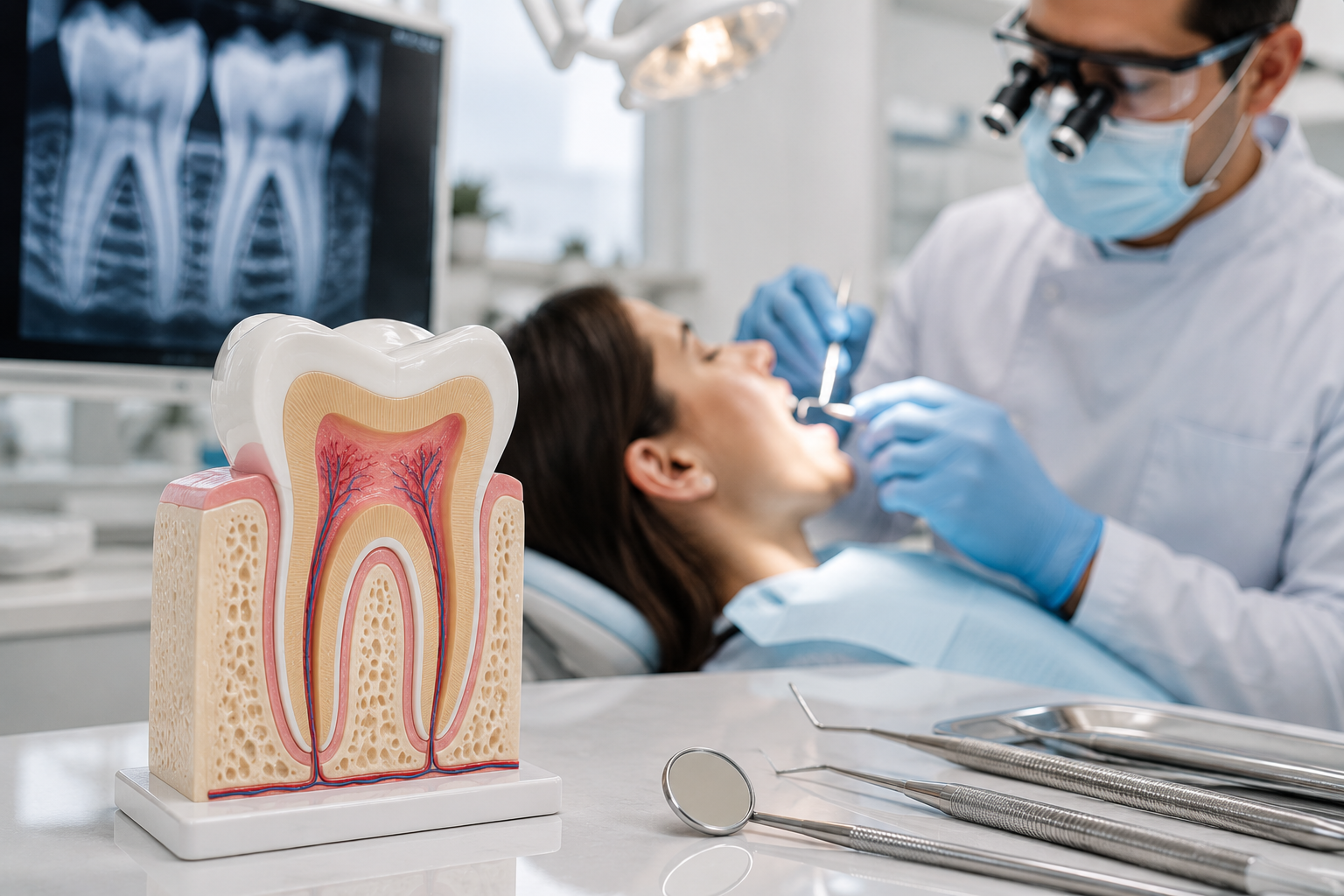
Understanding what happens during the procedure can help ease any anxiety you may have. Modern root canal treatment is a safe, routine procedure that focuses on removing infection, relieving pain, and preserving your natural tooth. While every case is different, the treatment follows a structured process to ensure the best possible outcome. Although the root canal treatment cost may vary depending on the complexity of the procedure, the steps involved remain largely the same.
Your dentist begins with a clinical examination and digital X-rays to assess the infection and determine whether a root canal is the most appropriate treatment.
The area is numbed using local anaesthesia, ensuring the procedure is comfortable and virtually pain-free for most patients.
A small opening is made in the tooth to remove the infected pulp. The root canals are then cleaned, shaped, and disinfected to eliminate bacteria and prevent further infection.
The cleaned canals are filled with a biocompatible material and sealed to protect the tooth from future bacterial contamination.
The tooth is restored with a filling, and if needed, a dental crown is placed to strengthen it and restore normal function. Whether you’re evaluating the root canal treatment price or comparing the root canal cost, it’s important to remember that the final restoration is often a separate but essential part of successful treatment.
A common question patients ask after treatment is whether a root canal is a permanent solution. While no dental procedure can guarantee lifelong results, a properly performed root canal can last for decades, and in many cases, even a lifetime. The longevity of the treated tooth depends not only on the quality of the procedure but also on how well the tooth is restored and cared for afterward.
Placing a dental crown, especially on back teeth, plays a crucial role in protecting the treated tooth from fractures and restoring its strength. Maintaining good oral hygiene through regular brushing and flossing, attending routine dental check-ups, and addressing any dental concerns early can also help prevent future complications. Simple habits like avoiding chewing on hard objects such as ice, pens, or using your teeth to open packages can further extend the life of the treated tooth. With the right care and regular professional monitoring, a root canal-treated tooth can continue to function comfortably and effectively for many years.
A root canal is not just about treating a painful tooth. It is about preserving your natural smile, preventing further infection, and restoring the tooth’s ability to function comfortably for years to come. While understanding the root canal treatment cost in India can help you plan your treatment, the right decision should also consider the expertise of the dental team, the technology used, and the long-term health of your tooth.
The cost of a root canal can vary based on several factors, including the complexity of the case, the tooth involved, and the type of restoration required afterward. Getting an accurate diagnosis early can help you understand your options better and avoid complications that may require more extensive treatment in the future.
At World Dental Specialities, patients receive personalized treatment plans backed by over 60 years of dental expertise, advanced diagnostic technology, and a multidisciplinary team of specialists. If you are experiencing persistent tooth pain or have been advised to undergo a root canal, a consultation can help you understand the condition of your tooth and the most suitable approach for your oral health needs.
The root canal treatment cost in India generally ranges between ₹7000 and ₹25,000+ or more, depending on factors such as the type of tooth, complexity of the infection, technology used, and the dentist’s expertise. Front teeth usually have a lower root canal cost compared to molars, which often require treatment of multiple canals. A dental crown, if required after the procedure, is usually charged separately
The rct full form in dental is Root Canal Treatment. It is performed when the pulp inside a tooth becomes infected or inflamed due to deep decay, cracks, trauma, or repeated dental procedures. The treatment removes the infected tissue, cleans and seals the canals, and helps preserve the natural tooth instead of removing it.
The root canal treatment price varies because every tooth and infection is different. Factors such as the number of canals, severity of infection, need for additional procedures, and the type of restoration required can influence the final cost. For example, the rct treatment cost for a molar is usually higher than for a front tooth because molars have a more complex root structure
In most cases, the rct of teeth price covers only the root canal procedure and does not include the cost of a dental crown. A crown is often recommended after a root canal, especially for molars and premolars, to strengthen the tooth and protect it from fractures. Your dentist will explain the complete treatment plan and associated costs before starting the procedure.
With modern techniques and local anaesthesia, root canal treatment is generally a comfortable procedure. Most patients experience relief from the pain caused by infection after treatment. A successfully completed root canal, combined with proper oral hygiene and a well-fitted restoration, can last for many years and help you retain your natural tooth. The longevity and success of treatment depend on factors beyond just the initial root canal treatment cost, including the quality of care and regular dental maintenance.