How Laminate Veneers Can Transform Your Smile Completely
Categories:
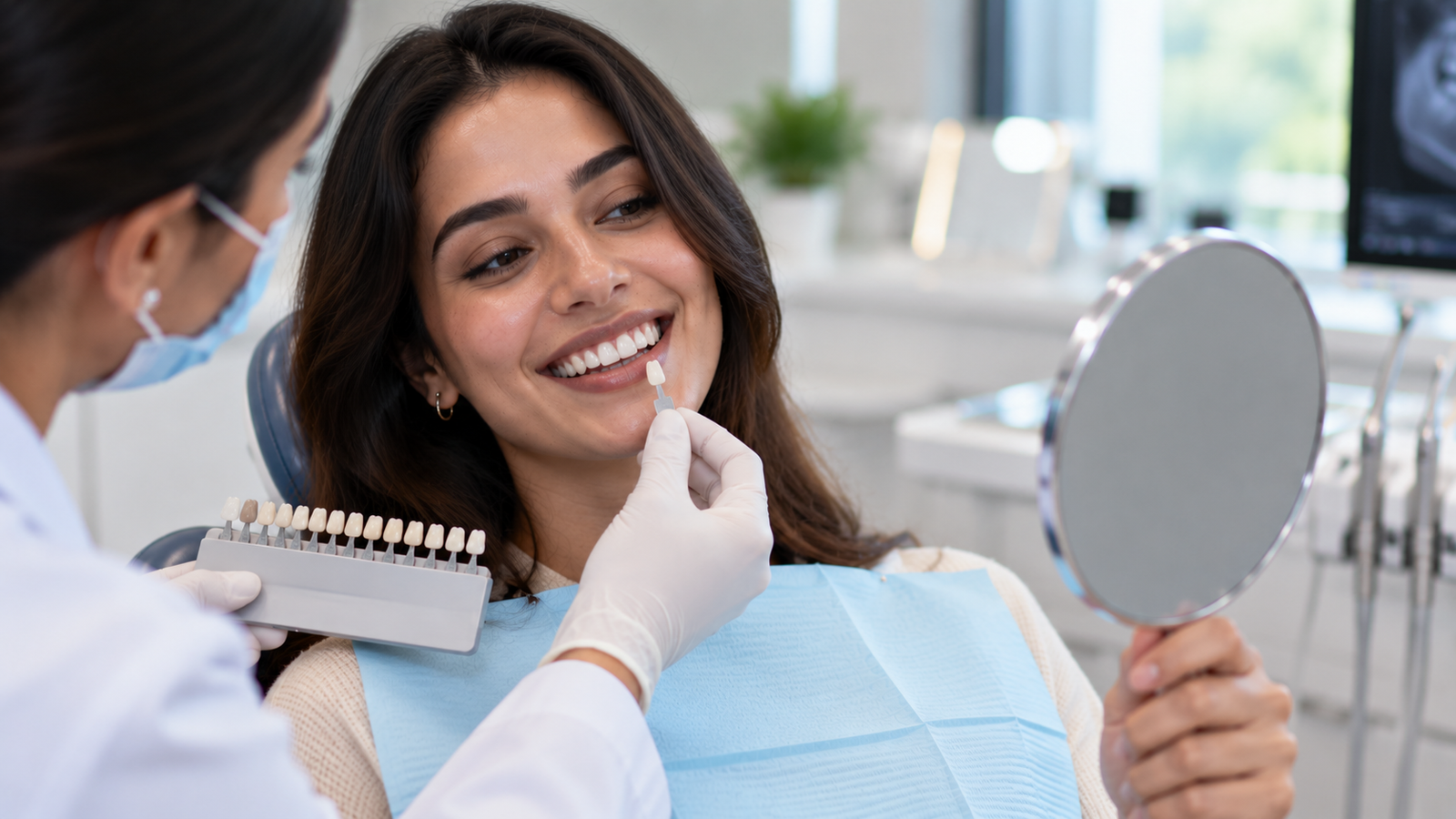
You may brush, floss and take good care of your teeth, yet still feel uncomfortable when you smile in photos. Perhaps your front teeth are slightly uneven, a few have chipped over the years, there is a small gap you have always noticed, or the colour has changed despite regular cleaning and whitening. The frustrating part is that these may be relatively small dental concerns, but they can change the way your entire smile looks.
And fixing them does not always mean extensive dental treatment.
For the right patient, veneers can reshape the appearance of the visible teeth while preserving as much healthy tooth structure as possible. They can address several cosmetic concerns at once, from colour and minor gaps to tooth shape, size and proportion, creating a smile that looks more balanced rather than obviously “done.”
This is where laminate veneers come into the picture.
Also referred to as dental laminates, these thin, custom-made restorations are bonded to the front surface of teeth. Depending on the material and your individual dental condition, they can subtly alter the appearance of a tooth while maintaining its natural function.
But veneers are not simply about placing a set of perfectly white teeth over your existing ones. The important questions are whether you actually need them, what type would suit you, how much tooth preparation is appropriate, and what kind of result will look natural on your face.
Understanding these details can help you decide whether veneers are the right solution for your smile or whether another treatment would make more sense.
Sometimes, you know you are unhappy with your smile, but you cannot pinpoint exactly why. It may not be one noticeably crooked or damaged tooth. Instead, several small details can affect how your teeth look together and change the overall appearance of your smile.
Your smile may appear uneven because of:
This is where laminate veneers can be considered. These are thin, custom-made restorations that are bonded to the visible surface of the teeth. Depending on the individual case, they can improve the appearance of discolouration, reshape uneven teeth, address certain small gaps, restore minor chips and create more consistent proportions across the visible teeth.
One of the key advantages is that multiple cosmetic concerns can be addressed as part of a single smile plan. For instance, someone may have slightly short front teeth, uneven edges and persistent discolouration. Treating these concerns together can create a more harmonious result than addressing each one separately.
However, veneers are not a solution for every dental concern. They primarily address appearance and do not treat active decay, gum disease or significant bite problems. Depending on the underlying issue, treatments such as orthodontics, professional teeth whitening or composite bonding may be more appropriate.
The important first step, therefore, is not deciding how many veneers you want. It is understanding why your smile looks the way it does and what treatment can improve it while preserving the health and structure of your natural teeth.
Also Read – How NRIs Can Get Same Day Dental Implants Done in India in One Visit
A common mistake in cosmetic dentistry is choosing the treatment before understanding the problem. If you notice a gap, discolouration, crowding or a chipped tooth, it is natural to start looking for the quickest cosmetic fix. But the treatment that improves the appearance of a tooth is not always the treatment that addresses the reason it looks that way.
This is particularly important with laminate veneers, because they involve altering and restoring the visible surface of the tooth. A dentist should first determine whether veneers are appropriate or whether a more conservative treatment could achieve the same result.
Here is how that decision may look in practice:
This is also why the term dental laminates should not be interpreted as a one-size-fits-all solution. Two people can have what appears to be the same cosmetic concern but require completely different treatments after a dental examination.
The goal of a good smile makeover is not to place veneers on as many teeth as possible. It is to identify the most appropriate way to achieve the desired improvement while preserving healthy natural tooth structure and maintaining comfortable function.
Sometimes that means veneers. Sometimes it means whitening, bonding or orthodontics. And sometimes the best decision is to leave a healthy tooth alone. A personalised assessment is what determines the difference.
Getting veneers is not simply a matter of choosing a shade and having thin coverings placed over your teeth. A successful teeth lamination procedure involves several carefully planned stages, and each one has a specific purpose. From the first examination to the final bonding, your dentist needs to consider the health of your teeth, your bite, facial proportions and the kind of change you want to see in your smile. Understanding what happens at each stage can also help you know what to expect from the treatment.
The process begins with a detailed examination rather than immediately preparing the teeth. Your dentist will assess your teeth and gums for problems such as decay, existing restorations, gum disease, cracks or excessive wear. Your bite and the way your upper and lower teeth meet are also important because they can influence whether veneers are appropriate.
This appointment is also when you can discuss what you would like to change. Whether your concern is colour, chipped edges, uneven tooth shapes or small gaps, being specific about what you dislike helps the dentist determine whether veneers are the right approach.
Once your teeth are confirmed to be suitable, the focus shifts to how the finished smile should look. Smile planning involves considering factors such as tooth length, width, shape, colour, symmetry and how the teeth relate to your lips and facial features. The goal is not to make every tooth look identical or unnaturally white.
Instead, the design should complement your face and preserve characteristics that make your smile look natural. Depending on the treatment plan, photographs, digital scans, models or other planning tools may be used to visualise the proposed changes before treatment begins.
The amount of preparation required depends entirely on the individual tooth and the planned result. Some patients may need minimal preparation, while others may require more space to accommodate the veneer and achieve the desired shape without making the tooth appear bulky. Your dentist may remove a small amount of enamel from the front surface where necessary.
The priority should be to preserve healthy natural tooth structure wherever clinically possible. This is also why claims about completely “no-prep” veneers should be approached carefully, as they are not suitable for every smile.
After the treatment plan and preparation are established, the veneers are custom-designed for your teeth. The shape, dimensions and shade are determined according to the agreed smile design. Digital dentistry can be particularly useful at this stage because scans and CAD/CAM technology can support accurate communication between the dental team and laboratory. The final restoration is created to fit the individual tooth rather than being selected from a standard template.
Before the veneers are permanently bonded, they need to be evaluated in the mouth. This allows the dentist to assess their appearance, fit, proportions and relationship with the surrounding teeth. You may also get an opportunity to see how the planned smile looks when you speak and smile naturally.
If adjustments to the shape, length or other details are necessary, this stage provides an opportunity to address them before final bonding. It is an important part of the process because even small changes can influence the overall appearance of a smile.
Once the fit, appearance and treatment plan have been approved, the veneers are bonded to the teeth using dental adhesive techniques. The teeth are carefully prepared for bonding, and each veneer is positioned precisely before being secured. The dentist then checks the bite and makes any necessary finishing adjustments. This final stage is what transforms the individually fabricated veneers into a functional part of your smile.
A well-planned teeth lamination procedure is therefore as much about assessment and precision as it is about aesthetics. The veneers themselves may be extremely thin, but achieving a natural and comfortable result requires careful decisions at every stage, from determining whether you need them in the first place to checking how they function once they are in place.
Also Read – What Is Cosmetic Dentistry and What Can It Fix
There is no single price for laminate veneers because treatment is customised to each patient’s smile. The number of teeth being treated is one factor, but the final cost can also depend on the material selected, complexity of the smile design, amount of tooth preparation, laboratory work and the expertise involved. Someone needing a few veneers for minor shape corrections may have a very different treatment plan from a patient looking to transform the appearance of several front teeth.
The teeth lamination cost can also increase if issues such as decay, gum disease, old restorations or bite problems need to be addressed first. For patients travelling from overseas, comparing clinics purely on the price per veneer can be misleading because materials, laboratory standards, appointments and aftercare may differ. A detailed treatment plan should clearly explain the number of veneers recommended, material being used, preparation involved and what the quoted cost includes.
A smile transformation is not simply about making teeth look whiter or more uniform. The right approach should address what is actually affecting your smile while protecting the health, structure and function of your natural teeth. Laminate veneers can be an effective option for correcting several cosmetic concerns at once, but they are not the right choice for everyone. Factors such as your enamel, bite, gum health, tooth position and expectations all need to be considered before treatment.
If you are considering veneers, a consultation is the best place to start. At World Dental Specialities, Kemps Corner, the focus is on understanding your dental concerns first and then recommending treatment based on what is clinically appropriate for your smile. With more than 60 years of dental expertise, the team can help you understand your options, what the treatment involves and whether veneers are genuinely the right solution for you.
No. Laminate veneers may not be suitable if you have untreated decay, gum disease, significant bite problems or insufficient healthy tooth structure. A dental examination is needed before treatment.
It depends on the individual case. Some veneers require minimal preparation, while others need more enamel removed to create adequate space. The aim should be to preserve as much healthy tooth structure as possible.
Their lifespan varies with the material, bite, oral hygiene and habits such as grinding. Clinical evidence shows that ceramic laminate veneers can provide long-term results, although chipping and other complications can occur.
Dental laminates usually cover the visible front surface of a tooth, whereas crowns cover the tooth more extensively. Veneers are generally considered when the main concern is cosmetic rather than extensive structural damage.
Teeth lamination cost depends on factors such as the number of teeth, material, preparation required, laboratory work and complexity of the treatment. Additional dental treatment may also affect the overall cost.
In selected cases, yes. Laminate veneers in dentistry can improve the appearance of small gaps, chipped edges, uneven shapes and proportions. However, significant misalignment may be better treated with orthodontics rather than veneers.