
Full Mouth Rehabilitation Steps, Procedure & What to Expect
Categories:
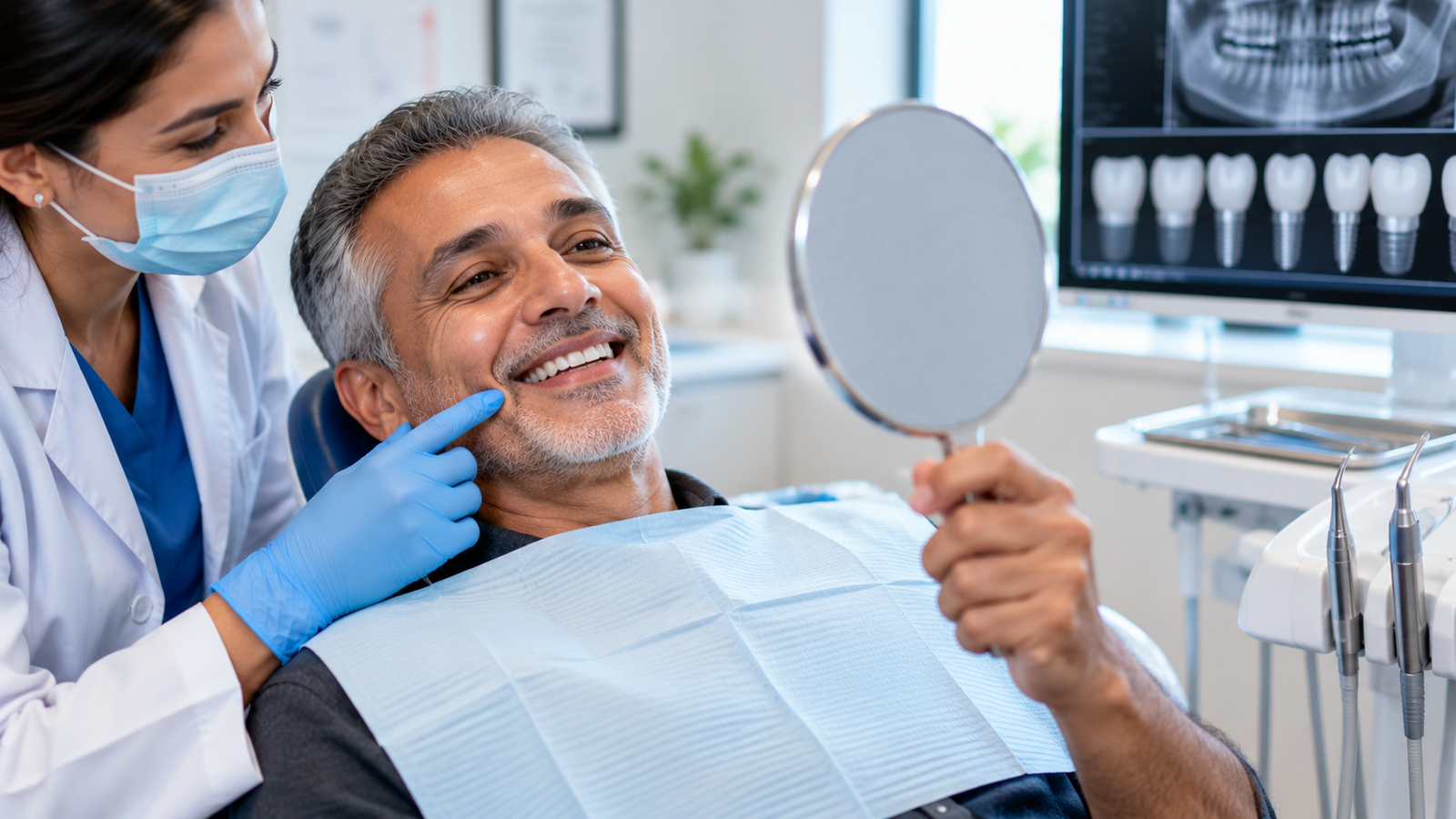
You may have reached a point where your teeth seem to need attention all at once. Perhaps an old crown has started bothering you, a few teeth are missing, chewing has become uncomfortable, or years of wear have changed the way your smile looks. For many people, these problems are not new. They have simply been managed one at a time, often because finding the time and money to address everything together feels difficult.
This becomes an even more practical concern if you live abroad and are planning a short trip to India. You may be wondering whether the dental work you have been postponing can be completed during your visit, and whether several different treatments can be planned together rather than through repeated appointments over months.
This is where full mouth rehabilitation may be considered. It is not a single procedure or a standard package of treatments. Instead, it involves looking at your teeth, gums, bite, missing teeth, and overall oral health together, then creating a treatment plan based on what your mouth actually needs.
For some patients, this may involve implants and crowns. For others, it could include gum treatment, root canals, bridges, bite correction, or cosmetic dentistry. The full mouth rehabilitation steps and timeline depend on the condition of your teeth and the treatments required.
Understanding how the process works can help you know what to expect, especially if you are considering treatment in Mumbai or travelling to India for dental care.
Dental problems rarely appear as a neat list. A missing tooth may have been manageable for years, while an old crown, worn teeth, or changes in your bite may only recently have started causing trouble. When several such issues exist together, treating each tooth separately may not always provide the most functional or lasting result.
This is where full mouth rehabilitation may be considered. Instead of focusing only on the tooth that hurts, the dentist looks at how your teeth, gums, bite, and existing dental work function together. The goal is to understand the bigger picture before deciding what needs to be repaired, replaced, or preserved.
Rehabilitation may be considered when you have several concerns, such as:
The aim of full mouth restoration is not to replace every tooth. If a natural tooth can be preserved safely, that may be preferable. The dentist instead considers how individual problems are connected and how any new restorations will work together.
The process begins with a detailed examination of your teeth, gums, bite, and existing restorations. Depending on your condition, this may include X-rays, CBCT scans, digital impressions, photographs, or intraoral scans.
Your dentist will assess:
These findings determine the sequence of treatment. Active infection or gum disease may need to be addressed first, while implants, crowns, bridges, root canals, or bite correction may follow depending on your needs.
For NRI and international patients, this assessment can also help with planning treatment around a visit to Mumbai. Sharing previous dental records or scans before travelling may make the initial consultation more productive and give you a clearer idea of the appointments and healing time involved.
Also Read – Full Mouth Rehabilitation Cost in India Compared to Abroad
Once the dentist understands the condition of your teeth, gums and bite, the next step is to work out what needs to be treated first. This is where the full mouth rehabilitation steps begin to take shape. The treatment is usually carried out in stages, with each stage creating a stable foundation for the next.
The first priority is to address active dental problems. Decay, infection, gum disease or severely damaged teeth may need attention before permanent restorations are placed. Where possible, natural teeth are preserved through treatments such as root canals or restorative procedures. Teeth that cannot be saved may need to be removed.
Once the mouth is stable, the focus shifts to rebuilding function and appearance. Depending on your needs, this may include:
The order matters. For instance, an implant may need time to heal before its final crown is placed. Similarly, the bite needs to be considered before completing extensive restorative work. This is why full mouth restoration is planned as a sequence rather than a collection of unrelated procedures.
For NRI and international patients, treatment planning also needs to account for travel. Some procedures can be completed during a visit to Mumbai, while others require healing time or a follow-up appointment. Discussing the treatment plan and expected timeline in advance can help you plan your trip without trying to rush procedures that need more time.
Once treatment begins, full mouth rehabilitation is usually carried out in stages rather than completed in one sitting. Your dentist may first address problems such as decay, infection, gum disease or damaged teeth before moving on to implants, crowns or other restorations. If implants are part of the plan, there may also be a healing period before the final teeth are placed. During this time, temporary restorations may be used so you can continue eating and speaking comfortably.
As the treatment progresses, you may notice that your bite and the way your teeth come together feel different. This is because the rehabilitation is designed to restore not just individual teeth but also how your upper and lower teeth work together. Your dentist may make small adjustments to improve your comfort, chewing and speech. Follow-up visits are therefore an important part of the process, rather than simply a final check after treatment.
The experience can also vary depending on how much treatment you need. Someone requiring a few crowns and replacement teeth may have a relatively straightforward process, while someone with extensive tooth loss, gum problems or significant bite issues may need more stages and a longer recovery period. Understanding your full mouth rehabilitation steps beforehand can make the process easier to plan, especially if you are travelling to Mumbai from another country and need to coordinate treatment with your stay.
The full mouth rehabilitation cost can vary significantly because the treatment is planned around the condition of your teeth, gums, bite and jaw rather than a fixed set of procedures. The final estimate depends on what needs to be treated, how many teeth are involved and the type of restorations required.
Several factors can influence the overall full mouth restoration cost, including:
This is why an advertised full mouth rehabilitation cost in India should not be viewed as a standard price for every patient. Someone who needs several crowns will have very different requirements from someone who needs implants, gum treatment and extensive bite correction.
Location can also influence pricing. Patients comparing full mouth rehabilitation costs in Mumbai may find different estimates based on the clinic, specialists, technology, materials and complexity of treatment. If you are travelling to India for treatment, it is worth checking what the quoted cost includes, such as consultations, diagnostics, temporary restorations, permanent restorations and follow-up care.
Also Read – Why Americans Are Choosing India for Full Mouth Reconstruction and Saving Big
For international patients, planning full mouth rehabilitation in India involves more than deciding on the treatment itself. Sharing your previous dental records, X-rays or scans with the clinic before travelling can help the dentist understand your condition and give you a preliminary idea of the treatment required. A consultation before your trip can also help clarify the likely number of appointments, which procedures can be completed during your stay and which ones may need healing time before the next stage. This is particularly important when implants or extensive restorative work are involved.
It is also worth planning your accommodation around your treatment schedule, allowing enough time for appointments, recovery and any necessary follow-ups rather than trying to fit everything into a very short visit.
Full mouth rehabilitation is not simply about fixing damaged or missing teeth. It is about restoring the way your teeth look, function and work together, with each stage planned around your individual dental needs. The full mouth rehabilitation cost in India can vary depending on the procedures, materials and complexity involved, so understanding your treatment plan is just as important as understanding the price. For patients travelling from abroad, planning consultations, treatment stages and recovery time in advance can make the experience much smoother.
If you are considering full mouth rehabilitation treatment in Mumbai, World Dental Specialities can help you understand your options and plan your treatment around your needs and travel schedule. With decades of dental experience and a focus on advanced restorative care, the team can guide you from diagnosis and treatment planning through to your final restorations.
Full mouth rehabilitation is a personalised treatment plan that restores multiple teeth, gums and the bite. It may combine treatments such as dental implants, crowns, bridges, root canals and other restorative procedures.
The full mouth rehabilitation steps usually include a detailed dental assessment, treatment planning, addressing active dental problems, restoring damaged or missing teeth, and checking the final bite and function. The exact sequence depends on each patient’s needs.
The full mouth rehabilitation cost in India depends on the number of teeth being treated, procedures required, materials used and complexity of the case. An individual treatment plan is needed to provide an accurate estimate.
The full mouth rehabilitation cost in Mumbai varies between patients and clinics based on the treatment involved, specialist expertise, materials and technology used. It is best to request a personalised estimate after a dental evaluation.
The duration of full mouth rehabilitation depends on the extent of treatment. Some cases can be completed in a shorter period, while treatments involving implants or extensive healing may require multiple visits over several months.
Yes, full mouth rehabilitation in India can be planned for international patients by coordinating consultations, treatment stages and follow-ups around their travel schedule. However, procedures requiring healing time may need more than one visit.