
How Digital Smile Design Is Transforming Cosmetic Dentistry
Categories:
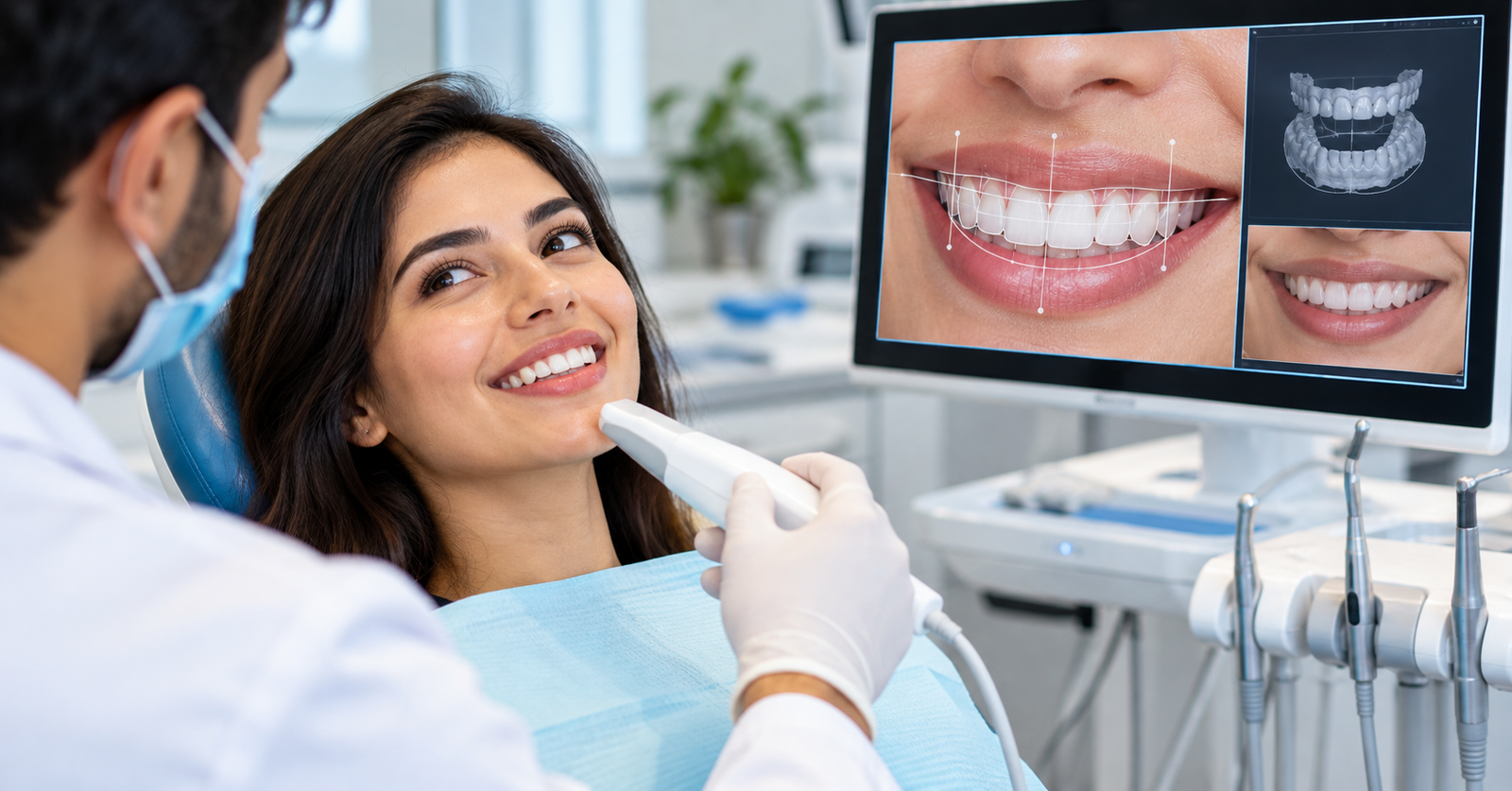
Digital Smile Design (DSD) is a comprehensive treatment planning methodology that uses digital imaging, facial analysis, and smile simulation software to visualize cosmetic outcomes before treatment begins. This technology-driven approach integrates intraoral scanners, digital photography, and chairside visualization displays to improve patient communication, enhance case acceptance rates, and deliver predictable aesthetic results in cosmetic and restorative dentistry procedures.
Cosmetic dentistry has historically struggled with a fundamental communication gap: patients cannot visualize proposed aesthetic outcomes until after irreversible treatment begins. Traditional consultation methods rely on verbal descriptions, hand-drawn sketches, or generic before-and-after photographs that fail to address individual facial proportions, tooth alignment variations, or personalized smile characteristics. This visualization deficit directly contributes to patient hesitation, extended decision cycles, and elevated case abandonment rates in elective cosmetic procedures.
The modern patient arrives at cosmetic consultations with heightened expectations shaped by digital media, social platforms, and immediate visual gratification standards. They demand concrete visual evidence of proposed outcomes, personalized treatment simulations, and transparent communication about aesthetic possibilities before committing to veneers, crowns, orthodontic alignment, or full-mouth rehabilitation. Practices that continue operating with analog consultation workflows face systematic disadvantages in case acceptance, patient trust-building, and competitive positioning within the elective cosmetic market.
Digital Smile Design addresses this structural challenge by transforming abstract treatment proposals into tangible visual simulations that patients can evaluate, modify, and approve before clinical intervention begins. This methodology shifts cosmetic dentistry from subjective artistic interpretation to evidence-based digital planning protocols that align patient expectations with clinically achievable outcomes.
Digital Smile Design represents a systematic clinical methodology rather than a single software application or proprietary system. The digital smile design program integrates multiple technology touchpoints: extraoral facial photography, intraoral digital scanning, cephalometric X-ray analysis, and smile design software platforms that overlay proposed dental modifications onto patient-specific facial anatomy. This multi-layered approach enables digital dental designers to create personalized smile mockups that respect facial symmetry, lip dynamics, gingival architecture, and phonetic requirements.
The DSD dental workflow begins with comprehensive diagnostic imaging capture using calibrated digital photography protocols that document frontal smile views, profile angles, and dynamic facial expressions. DSD in dentistry protocols require standardized lighting conditions, reproducible patient positioning, and high-resolution imaging equipment to ensure accurate digital measurements and proportional analysis. These baseline images serve as the foundation for all subsequent smile design program modifications and treatment simulations.
North America commands the largest share of the Digital Smile Design Software market, valued at approximately $1.14 billion in 2025, representing 40.7% of global market revenue. This market concentration reflects widespread adoption among cosmetic-focused practices seeking competitive differentiation through enhanced patient communication tools and visual treatment planning capabilities.
Also Read: What Is the Difference Between Aesthetic & Cosmetic Dentistry
Successful digital smile implementation requires strategic integration of four foundational equipment categories: digital imaging systems, intraoral scanning platforms, chairside visualization displays, and smile design software applications. Digital imaging systems must capture high-resolution extraoral photographs with standardized focal lengths, controlled lighting environments, and reproducible patient positioning to ensure accurate facial proportion measurements. These images feed directly into smile digital design platforms that enable tooth-by-tooth modification, gingival contouring simulations, and shade matching protocols.
Intraoral scanners complement extraoral photography by providing precise three-dimensional tooth geometry, occlusal relationship documentation, and preparation margin definition for restorative workflows. The integration between intraoral scan data and facial photography creates a comprehensive digital patient record that supports both diagnostic analysis and treatment execution phases. Chairside visualization displays transform the consultation experience by enabling patients to view proposed smile modifications in real-time, facilitating collaborative treatment planning discussions that align clinical capabilities with patient aesthetic preferences.
The digital smile design software market reached $1.56 billion in 2025 and is growing at 17.3% annually to reach $1.83 billion in 2026 and $3.42 billion by 2030. This sustained growth trajectory reflects increasing recognition that visual treatment planning tools directly impact case acceptance rates, patient satisfaction scores, and practice differentiation in competitive cosmetic markets. Practices investing in comprehensive digital smile design infrastructure position themselves to capture growing demand for personalized aesthetic dentistry services.
Digital smile design program implementation follows a structured three-phase deployment sequence that transforms consultation workflows and treatment predictability. Each phase builds systematically on diagnostic data, digital visualization, and clinical validation to ensure optimal aesthetic outcomes.
The foundation begins with standardized imaging protocols using calibrated extraoral photography. Capture frontal smile views at rest and maximum smile, profile photographs documenting facial convexity, and close-up intraoral images recording existing tooth morphology and gingival architecture. These images undergo systematic analysis measuring midline alignment, tooth proportions relative to facial width, incisal edge positioning relative to lower lip contour, and smile arc harmony with lower lip curvature.
Specialized smile design program software overlays proposed dental modifications onto baseline facial photography. Digital dental designers adjust individual tooth dimensions, modify gingival zenith positions, simulate shade modifications, and test multiple design variations to identify optimal aesthetic outcomes that respect facial proportions and patient preferences. This iterative design process occurs before any clinical intervention, enabling risk-free exploration of treatment possibilities and collaborative refinement through patient feedback sessions.
The transition from digital planning to clinical reality involves fabrication of provisional restorations that replicate approved digital designs. These physical mockups enable functional testing, phonetic validation, and final aesthetic confirmation before permanent restoration fabrication begins. The DSD dental methodology creates a continuous feedback loop between digital planning, provisional testing, and definitive treatment delivery that minimizes revision cycles and ensures predictable cosmetic outcomes.
Practices implementing comprehensive digital smile design protocols report substantial improvements across multiple performance indicators. The visual nature of digital smile simulations eliminates abstract treatment descriptions, enabling patients to make informed decisions based on concrete outcome previews rather than subjective artistic interpretations. Key benefits include:
Clinical performance metrics demonstrate that DSD in dentistry workflows improve treatment predictability by establishing clear aesthetic targets before tooth preparation begins. Digital design files guide provisional fabrication, laboratory communication, and final restoration characterization, creating systematic quality control checkpoints throughout the treatment sequence. Implementation advantages include:
AI-based digital smile design improves patient and clinician satisfaction by 58%, with a meta-analysis of published studies using 95% confidence intervals confirming statistical significance (Source: URBN Dental, 2025). These satisfaction gains stem from improved communication clarity, elevated outcome predictability, and enhanced collaborative treatment planning processes that position patients as active participants rather than passive recipients of clinical decisions.
Audit existing imaging capabilities, identify gaps in digital photography equipment, intraoral scanners, and chairside displays, and establish equipment procurement priorities aligned with clinical volume projections.
Implement standardized imaging protocols, train clinical staff on digital photography techniques, establish smile design software proficiency, and create repeatable consultation workflows integrating digital simulations.
Execute digital smile design protocols on select cosmetic cases, document workflow bottlenecks, refine imaging protocols based on real-world feedback, and validate provisional-to-definitive transition processes.
Incorporate digital smile simulations into standard cosmetic consultations, develop patient education materials explaining the DSD dental methodology, and train front-office staff on case presentation protocols leveraging visual treatment previews.
Establish digital file transfer protocols with dental laboratories, validate shade communication workflows using digital references, and create quality control checkpoints ensuring laboratory deliverables match approved smile digital designs.
Monitor case acceptance rate improvements, track patient satisfaction metrics, expand digital smile design program application to complex full-mouth rehabilitation cases, and refine protocols based on outcome data analysis.
Digital Smile Design represents a fundamental shift in cosmetic dentistry from subjective artistic interpretation to evidence-based visual treatment planning. The methodology integrates digital imaging infrastructure, smile simulation software, and structured clinical protocols to improve patient communication, elevate case acceptance rates, and deliver predictable aesthetic outcomes that align patient expectations with clinical capabilities before irreversible treatment begins.
World Dental Specialities supplies the foundational equipment infrastructure enabling Digital Smile Design implementation: professional dental operating chairs with integrated patient visualization displays, digital intraoral X-ray systems capturing diagnostic imaging for treatment planning, and sterilization equipment maintaining clinical compliance throughout cosmetic workflows. These integrated solutions support practices transitioning to technology-driven cosmetic dentistry protocols that meet modern patient expectations for visual treatment previews and collaborative aesthetic planning.
Ready to take the next step? Explore how World Dents can help you achieve your goals. Speak to Your Smile Specialist Today!
Essential equipment includes a high-resolution digital camera with standardized focal length, calibrated lighting setup for reproducible facial photography, intraoral scanner for three-dimensional tooth documentation, chairside display monitor for patient visualization, and smile design software platform enabling digital mockup creation and modification.
Digital smile simulations eliminate abstract treatment descriptions by providing concrete visual previews of proposed aesthetic outcomes. Patients can evaluate, modify, and approve designs before treatment commitment, reducing decision anxiety and shortening consultation-to-commitment timelines through transparent outcome visualization.
Yes, Digital Smile Design protocols extend beyond single-tooth cosmetic cases to comprehensive full-mouth rehabilitation planning. The methodology enables systematic evaluation of vertical dimension changes, occlusal plane modifications, and complex aesthetic-functional integration before extensive tooth preparation begins.
Clinical staff require training in standardized digital photography techniques, smile design software operation, patient positioning protocols for reproducible imaging, and consultation communication strategies leveraging visual treatment simulations. Most practices achieve proficiency within 4-6 weeks of structured training and pilot case execution.
Digital design files serve as precise communication tools replacing ambiguous shade tabs and verbal instructions. Laboratories receive approved smile simulations, intraoral scan data, and digital shade references enabling accurate restoration fabrication matching patient-approved aesthetic targets established during consultation phases.